Tuesday, March 20, 2012

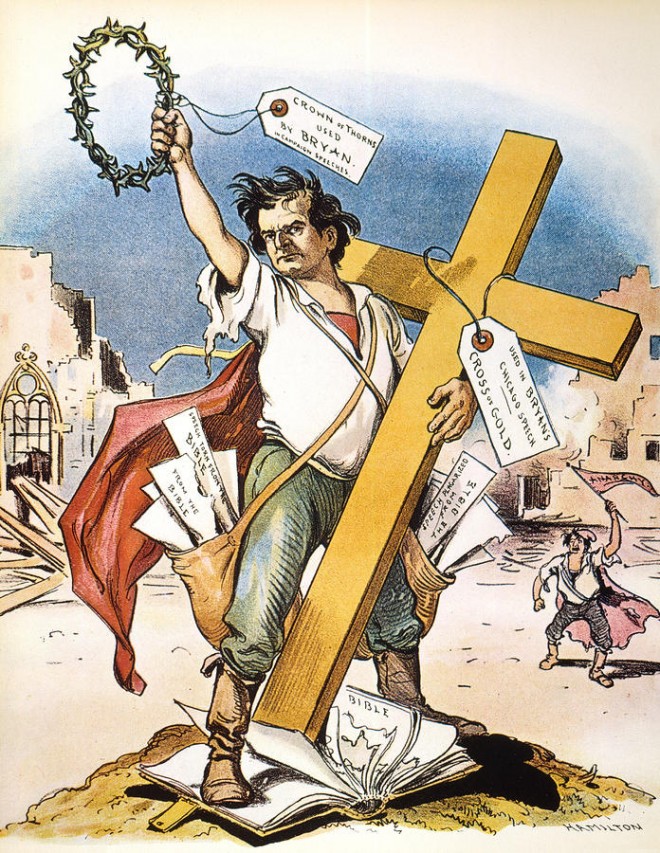
Mr. Bernanke Scores Zero on His Term Paper, As Marked by Me

20 March 2012

To my knowledge, Mr. Bernanke has never done this before. He has laid out his delusional belief system for all to see. (Ben Bernanke, a former Princeton University professor, is the Chairman of the US Federal Reserve, a private corporation which manages money supply and interest rates in the US.)

Indeed, the emperor has no clothes.

Joe Weisenthal, an intrepid reporter with Business Insider who has a notable nose for news, summarized Mr. Bernanke's first lecture on the history of the Federal Reserve as follows. Note that Mr. Bernanke began by attacking the gold standard. That was mistake number one. Mr. Bernanke's multitudinous errors proceed from there....

In my family archives, I still have an essay written by my father on the gold standard from his college days in the late 1930s. Let me tell you, my father got it right over 70 years ago, and Mr. Bernanke has gotten it 100% wrong today. Would that my father had chaired the Federal Reserve instead of Mr. Bernanke (and before him, Mr. Greenspan).

Mr. Wiesenthal, who is indefatigable, summarized Mr. Bernanke's speech as follows:
  1. To have a gold standard, you have to go dig up gold in South Africa and put it in a basement in New York. It's nonsensical.
  2. The gold standard ends up linking everyone's currencies, causing policy in one country to transmit to another country (sort of how U.S. policy now transmits to China, because they've fixed the yuan price to the dollar). So for example, if the U.K. fixes the number of pounds to an ounce of gold, and the U.S. fixes the number of dollars to an ounce of gold, then the pound and the U.S. dollar inadvertently become linked.
  3. It creates deflation, as William Jennings Bryan noted. The meaning of the "cross of gold" speech: Because farmers had debts fixed in gold, loss of pricing power in commodities killed them.
  4. The gold standard tends to cause interest rates to rise during downturns and interest rates to fall during good times, the exact opposite of what monetary policy should be doing.
  5. The economy was far more volatile under the gold standard (all the depressions and recessions back in the pre-Fed days).
  6. The only way the gold standard works is if people are convinced that the central bank ONLY cares about maintaining the gold standard. The moment there's a hint of another priority (like falling unemployment) it all falls apart.
  7. Gold standards leave central banks open to speculative runs, since they usually don't hold all the gold.
Sadly but truly, the above summary is more or less what Mr. Bernanke had to say in his first of four lectures. From here, we can't expect much success in the subsequent lectures. How do you make a building stand when the foundation is unstable - perhaps not even there?

I replied to Mr. Weisenthal's summary as follows:

"Just to summarize, Bernanke is wrong on every point. However, this is the clearest exposition yet of his twisted logic. Others will refute this completely, so permit me to highlight a couple of the more subtle points:

1. We lock gold away because it is a real and rare substance that has real value (humans want it for many reasons, creating demand).

2. The interlinking prevents one trading partner from cheating another with bad money (as the US has done to China).

3. Deflation is the desired outcome of increasing productivity.

4. Savings are rewarded during downturns, creating income stability for the prudent, as well as future capital for business investment (also by the prudent).

5. The point about volatility is true. However, that kind of volatility (A) teaches everyone to be cautious vs reckless, and (B) prevents black swans, which emerge when volatility is suppressed by central banks while the underlying system rots.

6. It is not the job of any central bank or government to target employment. Free markets do that all my themselves.

7. Let's look at the run on the US gold hoard in the early 70s. Oh yeah, the US was running a guns and butter policy and undermining its currency. The French figured that out and took their gold. So governments that manage their budgets foolishly get punished by the free market. Hmmm. That is bad? Why was that again?


"To be clear, von Mises dealt with all of Bernanke's points half a century ago. However, knowing that Mr. Bernanke thinks this way helps me sleep more soundly at night as a gold investor. It's amazing how the smartest people can rationalize the most egregious behaviours.

"Mr. Bernanke, that will be a big round 'zero' on your term paper. Please go back to kindergarten and start over"

Read more at the Business Insider (and weep for the lost financial guardians of the US financial system).

As Mr. Bernanke pointed out, prices were unstable in the short-term under the gold standard (but stable over the long-term). How exactly has the Federal Reserve fixed that problem? See the chart below.

Since the creation of the Federal Reserve in 1913, prices are now unstable over both the short-term AND the long-term. Gee, thanks for fixing that problem, Mr. Bernanke!

Also check out this more recent article on Business Insider.

More from von Mises on the gold standard here.

30 March 2012: This is true. Paul Samuelson, the author of the world's best-selling economics textbook, "flunked" Mr. Bernanke shortly before his death in 2009. Click here.
_

Saturday, March 10, 2012

US Debt to GDP: Think 160% (Higher than Greece, Spain, Italy & Portugal)

10 March 2012

Bruce Krasting, a retired hedge fund manager, has recently taken a look at the off-balance sheet debt of the US government.

When you add the off-balance sheet debt (much of it high-risk loans to the public) to the $10.4 trillion in official government debt held by the public, you get a $24 trillion figure, in contrast to an annual GDP figure of $15 trillion. (That is, the above chart overlooks this $13-14 trillion off-balance sheet amount.)

This gross debt to GDP figure is actually the highest in the developed world.

Think Enron.

So exactly why are US government bonds considered a safe haven? You've got me.

My take, not that far down the road, the safe haven status of the US will be challenged by the international community. Whoever happens to be president at that juncture may have an unfortunate time with the history books.... (Not a job I would want, nor recommend!)
_

Wednesday, February 08, 2012

Late Night Thoughts on Gold Scarcity - Nearer Than You Might Think

8 February 2012Link
Back in 2003, I read every article on gold and gold investing I could find. Now I only read those that I think will introduce me to truly new ideas, or that are composed by authors whom I regard as considerably wiser than their peers.

Jeff Clark, a partner of Doug Casey, is one of the writers whom I trust to make me stretch my thinking a little bit further. Jeff has again succeeded, in his new article, "A New Reason Gold Stocks Will Soar."

Anyone who is economically minded thinks in terms of market rule #1: Prices are set by the balance of supply and demand. Here's what we don't often think about. Human population is rising more rapidly than the rate of gold production, while at the same time, most nations in the world are engaged in a process of "competitive currency devaluation."

Human population has increased 15% since 2000, while annual new gold supply has fallen 4.2%. The rate of printing of new money by most world powers has been running 5-10% per year since 2000, and the US has increased its (more rapidly devaluing) money supply at this torrid pace since 1960.

Let me walk you through a scenario that is not that difficult to imagine.

1. Let's say that at some point, a market shock pushes up treasury yields (effective interest rates) for the major powers (the US, Britain and the European Nations, Japan, and perhaps China). The Europeans have already shown us that even at rates in the 7% range, countries such as Italy and Spain are unlikely to be able to repay their debts (interest rates on debt will grow more rapidly than government revenues). At 7% interest, the US would be paying $1 trillion per year to service its world record-setting debt load.

2. As Mr. Clark points out, the market capitalizations of Apple Computer and Exxon Mobil are each larger than the combined valuations of every gold mining company in the world. China alone (mostly its private citizens) bought slightly over half of all of the world's new gold supply (3.3 million ounces) in the month of November 2011. And the $47 billion of gold investments held by global pension funds represents only 0.15% of their total holdings (an amount almost too small to be detectable). If that infinitesimal number were doubled, gold and gold stocks would still represent only 0.3% of institutional investments. That is, a doubling of institutional gold investments would still leave pension funds holding an amount of gold investments too small to mention or think about, but it would add $47 billion of demand to the (tiny) global gold market.

3. Mr. Clark is thus presenting a different kind of supply and demand argument. Consider only two factors. A doubling of Chinese demand (it's possible, the Chinese are massive savers) OR (not AND) a doubling of institutional demand (bringing institutional gold-related assets from 0.15% to 0.3% of total holdings) would effectively remove ALL new gold supply from the markets.

What would this mean for the average investor?

Think about it. We're not talking about rising prices in the face of increased demand. We're talking about NO SUPPLY in response to only marginally increased demand. Gold bullion, gold coins, gold certificates. It doesn't matter. Physical gold would rapidly become unavailable to the ordinary saver/investor AT ANY PRICE.

At this point, you might be asking, "Gold is mostly held in storage. It has only minor industrial and economic uses. Who would care?"

Here's the problem with the "who cares" argument. As we discussed earlier, even a minor spike in interest rates (say to 7%) would create a financial crisis in almost every major national economy. That is, our government leaders would have to pare back government services to a drastic degree (unlikely to be popular: consider the present situation in Greece being replicated in every major nation in the world), or to pay their mounting debts by inflating and devaluing their currencies (a step that they have already taken). At some point, currency devaluation causes citizens - particularly savers - to lose confidence in the currency itself, and thus to seek alternative stores of value.

Now you'll understand why gold has been the world's "reserve currency" for thousands of years. Imagine holding your wealth in barrels of oil in your back yard. it poses storage problems. Gold is the most effective and time-honoured store of value, particularly during a period of loss of confidence in "printed money." That is, when there is a growing sense that "nothing" has or holds value, then the demand for reliable stores of value increases. And as we've established, a massive surge in gold demand would not be needed to unbalance the market. In fact, a minor and incremental increase in gold buying is all that it would take to "clear the market," leaving no more gold available at all for sale to the average consumer.

In conclusion, I'm not asking you to imagine a world where gold is "expensive," perhaps much more so than today. I'm asking you to imagine a world in which gold is simply NO LONGER AVAILABLE to the average citizen saver at any price.

Read Jeff Clark's article here for more details and analysis.
_

Saturday, January 28, 2012

Project Moonbase - Mr. Romney Opts Out (To Our Peril)

28 January 2012

Mitt Romney just wrote himself off in my book. He opposes Mr. Gingrich's plan for a moon base, and would "fire" any staffer who suggested such an idea. (Click here.)

Has anybody here thought more than 50 years ahead? By 2062, we will certainly not have enough oil or natural gas to power human activity. The US and China have extensive coal reserves, but that is hardly appealing as a long-term energy plan.

Even with voluntary, or even mandatory, population control, we will still have 7 billion, and almost certainly more, humans inhabiting the planet.

Hopefully some plan for nuclear fusion as a source of power works out, but what if it doesn't? (It's not going to be easy to re-create the interior of the sun on our planet, even in "micro-spaces.")

We know for sure that the best source of solar energy is in space. If we're not operating in that environment in 50 years' time, we risk catastrophic developments. I'm just saying that humans (and by then, our robotic extensions) will have to be very active in space.

If Mr. Romney has never even thought about this, he is not fit for the presidency in my view.

_

Saturday, January 14, 2012

Doug Casey Sums It Up: The US Is Bankrupt

14 January 2012

What is the economic state of the US?

Bankrupt.

Doug Casey calls our present situation the "Greater Depression."

Click here for Doug's blunt take on our present predicament.
As usual, Doug has summed it up.

NOTE: Henry Blodget is now voicing second thoughts about Paul Krugman's "don't worry about the debt" argument, as well he should in my opinion. In addition to Blodget's four points, there is a fifth - our demographics are the inverse of the post WWII period (as Mr. Casey well explains). In brief, we should be very worried about the debt, as there is no ballooning younger generation to whom to hand it..... (though I also believe that robots will start to solve many of our economic problems - as well as create a host of new ones - as soon as the present decade). Click here for Mr. Blodget's opinion piece.
_

Wednesday, January 11, 2012

All You Need To Know About Gold....

11 January 2012

Probably every fact you would ever need to know about gold is here:

ALL THE WORLD'S GOLD

My advice, check it out....

All The World's Gold
From: Number Sleuth

_


Friday, January 06, 2012

The US Debt Is Still Too Big To Be Paid - Ever....

6 January 2011

I've often posted on this topic.

The US cannot pay its bills, except by the "extend and pretend" method of printing more money.

By the time all the money is printed to pay the bills, the integrity of the US dollar will certainly be called into question.

Here are just a few of the facts:

1. Every American man, woman and child is accountable for $135,000 in future tax liabilities.

2. Combined federal, state and local government expenditures amount to 46.6% of GDP.

3. Federal debt to GDP now exceeds 100%.

4. The government pays more money to US citizens than US citizens pay in taxes.

5. The government's fiscal gap now stands at $211 trillion (this is money committed to be paid in future for which no source of revenue has been identified).

Here's the link to the bad news - click here.
_

Friday, December 09, 2011

Clive Maund Is Excited about Gold and Silver Again

8 December 2011

Clive Maund is excited about gold and silver again (click here and here or here).

The implication of his present very bullish call for the precious metals is that things will work out favourably for the Euro at this particular juncture in history, but that it will be an inflationary solution (despite what the new European Central bank President, Mario Draghi, has been saying lately).

That is, the guys who typically make the smartest bets on the direction of global financial markets are going double or nothing on the Euro right now.

If there is an inflationary solution to the problem, look for gold to pass the $2000 level in the wink of an eye.

Mr. Maund's December 4, 2011 gold chart follows:

If there is more dithering, look for a massive and immediate crisis that will force a response - as, if things go too far, there will remain no reasonable way to fix the Euro. (The gold price will rise more slowly in the second scenario.)

That is, Humpty Dumpty has not yet toppled off the wall. If he does, it will be a chaotic scene for months and/or years to come.

14 January 2012: Mr. Maund changed his mind on this topic. However, I haven't. He worries about deflation. I don't.
_

Sunday, November 27, 2011

Desert Wall Street!

9 October & 27 November 2011

My "meditation" of the day (first posted 9 October 2011)....

I've gotta say this, with apologies to my liberal/progressive friends. "Occupy Wall Street" is totally misdirected and unnecessary. I am not saying this to offend. But here are the facts:

(1) Wall Street has destroyed shareholder value for 12 years.

(2) It is still doing so.

(3) The shareholders are deserting, and this will continue over the next decade - which will ultimately constitute 2 decades (and counting) of value destruction on Wall Street. By the end of the present decade, I'm pretty sure that mainstream investors will have "caught on" that self-serving directors and executive decision-makers are not in the game to create value for them, and they will have voted with their feet!

(4) The bad guys - of whom there are many - are likely either be fired for failure to serve their shareholders, or to lose their jobs, as the companies they have misdirected will cease to exist!

(5) Michael Moore, Paul Krugman and President Obama are thus redundant on this topic, and should find something else to do....

The free market knows how to fix THIS problem. What it can't fix is over-intervention by central planners, particularly the practice of money printing.

Seriously - protest the guys pulling the strings behind the stage, not the snow-blind executives who are destroying their own companies and paying themselves millions to do it!

I for one would be protesting (1) the Federal Reserve; (2) the Treasury Department; (3) the SEC; (4) Congress; and (5) the White House. What do they have in common? Their interference in the market has caused the majority of the present problems, particularly the creation of a distorted business climate that rewards speculation, excess, litigation, misdirection of capital and greed!

The value-destroyers will all disappear through natural processes (otherwise known as "hard times"). But it will take citizen action to put a stop to the intrusions of central planners, as they operate freely behind the scenes, and exhibit little change in behaviour under either Democratic or Republican administrations.

The present problem in the US (an excess of central planning) is thus most directly analogous to the decades of stagnation under central planning which still characterize Russia (under Putin, Russia has reverted to central control following a brief flirtation with very limited free market reforms), and which plagued China until its (still active) central planners began to unleash citizen initiative in the post-Mao years.

Interestingly, though the Chinese economy is still very much centrally planned,
an argument could be made that the US economy is now more planned and controlled (and certainly more litigated and regulated) than the Chinese economy!

The Chinese have more or less figured it out. They are arguably further down the road towards free market reform than the still constricting economies of the West. Time for us to catch up!

In brief, the focus of "the 99%" on the bad actors on Wall Street is evidence that once again, the broad majority are looking in the rearview mirror for an understanding of our broad public dilemma.

While the Wizard of Oz still pulls the strings and works the levers behind the curtain, the centre of global economic power has rapidly shifted to Asia's less fettered markets.

NOTE: One somewhat obvious example. The free market was able to "repair" the problem with General Motors, by putting the company out of business. Joseph Schumpeter described the "creative destruction" of capitalism, and it was working fine in the case of GM!

What happened? The central planners intervened, and the US government - with taxpayers' money - bought the dysfunctional company. Now WE own it! While salvaging GM may seem like a "good thing" on a short-term basis, what we have forgone is the opportunity to open up the competitive landscape in one of our still very important industries.

Had we not "propped up" GM and Chrysler, would the auto manufacturing business be a far more creative and interesting one today? I argue, "yes, almost certainly!"


Rescuing mismanaged companies from a natural death is NOT how to fix the problem!

(Think first, then act.... it saves a lot of time and energy!)

A FURTHER RANDOM THOUGHT: Precious metal investing is a bet that governments everywhere will keep doing the wrong thing and destroy value every time they intervene in the marketplace.

Unfortunately, this proposition has proven to be the "best bet in the casino" since 2001.

Would that it were otherwise, and some day, I am hopeful that it will be.

That is, hard times teach businesses lessons pretty quickly (adapt or die).

But they also teach governments lessons, just more slowly, as governments have more lines of defense, including such actions as money-printing, confiscation of citizen and corporate wealth, misdirecting and agitating the masses (refer to the
Nuremberg Diary for a historical account of this process), etc.

LINK: An on-the-ground encounter with Occupy Wall Street. Great writing (and observation). Click here.

26 November 2011: As the "OWS" movement has worn on and developed, I suspect that all of us have grown more "accustomed" to it. My fundamental criticism remains that the occupiers are about three decades late, and are now protesting a "self-extinguishing" class, the operators of American public companies, whose shareholders are obviously already deserting them. I have thus been arguing more recently for a movement to "Desert Wall Street."

That is, the desertion of Wall Street is already in progress, and, as Tom Lehrer might have said, we might as well get on with it! When the last shareholder has left, the excesses will certainly be repaired.... It is not mainstream Americans who must protest the excesses of "the street," but the longsuffering and deeply exploited shareholders, who have been robbed of potential profits to fund inordinate compensation, buybacks, speculative behaviour, etc. Do not forget that the craziness all started with inflationary monetary policy, a topic on which I have written extensively elsewhere (click here)....
_

Excess Liquidity, Though Poorly Understood, Is Our Primary Social and Political Problem

8 July 2007, partially updated 27 November 2011

(With minor revisions, the text of this article remains as originally posted on July 8, 2007. I have added current charts to confirm up-to-date money supply and inflation figures):

I am here revisiting a topic I have discussed previously.

Consider the news topics of the past several months:

1. Escalating terrorist attacks (planned or executed) against the west, most recently in the UK and Canada.
2. Continued deterioration in the quality and safety of civil life and the rise (return) of Al Qaeda and the Taliban in Iraq and Afghanistan.
3. Rising commodity prices (recently oil, lead and copper have been highlighted).
4. Shifting currency values (the rise of the Euro and the Canadian Loonie, the decline of the US dollar, etc.).
5. Civil war in the oil states of Africa.
6. The ongoing rise of violent Islamic fundamentalism both at home and in the Islamic world.
7. Rising human migration and homelessness around the globe.
8. Corruption, greed and excess of every imaginable kind in the world of business, including flawed accounting practices used to conceal the worthlessness of balance sheet assets, and corresponding systematic executive overpayment.
9. Government overspending and unrepayable deficits.
10. The global real estate bubble.
11. Tension in the Middle East around Palestine and Israel, Iran, and Lebanon.
12. Rising US antipathy towards China due to cheap imports and an under-valued Yuan.
13. Continuing military and civilian casualties at the battlefronts of the Middle East.
14. The return of the KGB and the dismantling of democracy in Russia.
15. The resurgence of anti-American, anti-business movements in Latin America following a long quiescence.
16. Irresponsible practices in the provision of consumer and mortgage loans to unqualified recipients, with the repackaging and sale of portfolios of these questionable loans to third parties (often pension funds, mutual funds and other large “arm’s length” investors).
17. Mexican peasants can no longer afford the cost of corn meal.

What do these news events have in common?

All are driven by global imbalances, and in my view, by monetary imbalances in particular.

Though contrary to common knowledge, the underlying thread of excess liquidity actually plays a key, and in many cases, a primary role in the causation of each.

Let’s walk through the basics again.

Excess liquidity refers to the “printing of money” to generate “instant cash” so as to provide immediate solutions to economic problems that have complex and often non-economic causes. Basically, governments expand the supply of money to an extent that exceeds the supply of new goods and services, making possible the continued easy availability of funds to meet public and private debt obligations.

Governments resort to policies of excess liquidity when they are cut adrift in terms of policy direction and lack the courage to address shifts in public mood and perception. In today’s era, virtually every government on the planet is pumping up its money supply at a drastic clip, resulting in what has sometimes been referred to as a global liquidity boom.

A rough estimate of current US liquidity growth is 10-15% per year (the best measure is the "Austrian true money supply"), against an increase in goods and services of probably 2-3% per year, resulting in a real inflation rate in the range of 7-12%. (The other oft-cited - but also misleading - variable in the calculation is the "velocity of money," or the rate of turnover of money as it changes hands, and this is presumed to remain constant over moderate periods of time.)

The true inflation amount (currently 11-12%) is now 7-8 percentage points higher than officially-published government inflation figures (click here). Governments “massage” the inflation numbers through various manipulative practices in order to enable their ongoing commitment to money printing as a strategy to address all constituent needs and as a panacea for all social ills.

Economics 101 will teach you that this policy causes monetary inflation, and in practical terms, this means that money loses its value. The inevitability of monetary inflation is based on the simple principle of supply and demand. That is, the supply of money exceeds the demand for money, so money loses its value.

However, Economics 101 will not teach you that inflation of the money supply generates disruptive and dangerous psychological, social and political imbalances and readjustments as well.

How does this occur?

Monetary inflation always and everywhere is an act of (involuntary) redistribution of wealth. The newly-created money never works its way through local, national and international economies smoothly or predictably. At its root, monetary inflation engenders deep psychological insecurities in its human participants.

A simple way to picture this is that the economic pie is growing 7-12% larger in inflation-adjusted terms every year. Therefore, if your piece of the pie is not also growing at 7-12% per year - you are falling behind. And if your piece of the pie is constant or shrinking, you are in fact losing ground at a rapid pace.

This rapidly shifting economic ground creates a psychology of "entitlement." Individual and collective participants in a global economy in flux are quite able to see not only that the size of the pie is ever-changing, but also that the rules for slicing it up are also inconstant.

Each of us for his or her own reasons feels a natural sense of entitlement to a fair share of the increase. Thus we become embroiled in disputes at every level of society - from the individual to the international level - in which each of us feels increasingly driven to struggle to win recognition of our own right to receive a fair share of the (in fact largely illusory) gains.

A more subtle aspect of the psychology of entitlement is that winners are perhaps more driven to protect their gains - which can be easily lost as the pie continues to grow - than those who are merely holding their own or falling behind. It is a peculiarity of human psychology that we are more averse to losing what we have than to foregoing what was never ours. Thus the global winners - those with expanding opportunities to gain from excess liquidity - become the most dangerous and potentially disruptive participants in the global liquidity game.

In my view, this key psychological insight explains much of the wave of terrorism and violence now sweeping across a Middle East burgeoning with liquidity, as well as the growing hostility of the resurgent Russian neo-communists and the so-called populist leaders of the Latin American commodity-producing nations (presently most visible in Venezuela and Bolivia, but similar movements are growing in Peru, Ecuador, Colombia, etc.)

In response to inflation, individuals on fixed incomes perceive their financial security to be dwindling and possibly threatened. Savers see the returns on their savings – in interest rate terms – lagging behind real rises in the cost of living. Politicians feel empowered to promise more funds to more parties and projects – but those in receipt of the funds develop a competitive mindset with respect to gaining their “fair share” of the increased funds. Those who are left behind in the process may feel cheated, mistreated, bitter and hostile.

Excess liquidity generates shifting price imbalances associated with capital misallocation. That is, the revaluation of goods, services and assets never proceeds smoothly when the value of money is disrupted by inflation.

In most cases, excessive increases In the money supply result in temporary and unsustainable but often dramatic bursts of economic growth, typically driving up the prices of materials or services which are in relatively short supply – often, and certainly in our present era – commodities in particular.

Periods of excess liquidity tend to drive increasing amounts of this new wealth in the direction of “new players” in the global economy, and this can be seen today in the flow of previously inconceivable quantities of funds to the Middle Eastern, Russian and Venezuelan oil producers, for example, and to the providers of low-cost manufactured products (in today’s case, typically located in southeast Asia).

Under these conditions, money is loaned and spent in increasingly irrational – even crazy – ways, and budgeting decisions are driven by ever shorter-term considerations (for example, “flipping condos in Florida,” packaging loans for low-income and unqualified home buyers, generating investor excitement over riding the wave of new trends – such as marketing portable communication devices in China and dominating the web search marketplace, launching grand military adventures that could not be considered in more sober eras – in our case, the American invasion of Iraq, and investing in ever-riskier and ever more improbable ventures – in particular, hyper-leveraged hedge funds, unprofitable technology companies, third world business ventures, low quality corporate and consumer loans, etc.).

The point I wish to emphasize is not that excess liquidity is monetarily risky, though it certainly is.

My primary point is that excess liquidity is psychologically, socially and politically risky.

The environment of global competition over how various assets will be revalued in response to monetary devaluation creates a background atmosphere of deep psychological insecurity.

This insecurity – caused by increasing financial uncertainty – is devastating in its implications for individuals, families, communities and societies. Ultimately, the process is politically disruptive as well, as individual strives against individual, interest group against interest group, and nation against nation, to be dominant players in the direction of the flow of the newly-created wealth caused – at its heart – by the devaluation of global currencies through the expansion of the global money supply.

Humans are extremely dangerous when they are insecure, and the policy of money supply expansion (excess liquidity), by its very nature, makes humans everywhere progressively more insecure – and therefore – progressively more dangerous.

I have stated several times that poor people are rarely dangerous or disruptive. Dangerous behaviour arises when anyone anywhere – whether poor or rich – is placed in a position to have to compete for new resources (and to defend the resources they already possess), particularly those coming available through disruptive adjustments in value resulting from currency devaluation.

In the Middle East, Russia and Venezuela, rising oil prices have forced the citizens of those societies into competition to be participants in the new wealth resulting from the rise in the value of a commodity (oil in this case) which is largely driven by the collapse in the real value of the currencies with which it is purchased (though this part will mostly be played out years later).

The competition to be participants in – and recipients of – the flow of new oil-generated wealth is creating massive psychological and social insecurity in the nations affected by the oil boom.

Because the new wealth is in fact of low quality (due to the collapsing value of the currency which is paying for the commodity), the competition for the inflow of new funds becomes more dangerous and disruptive still.

This drama is being played out many times over in many spheres around the world.

African despots and dictators are redirecting their energy to plays in the new global game of excess liquidity, creating disruptive social and ethnic conflicts over who shall and shall not participate in sharing the new wealth.

Pakistani clerics are preaching vitriol while funds flow into their coffers from wealthy donors who are themselves players in the global oil money game.

Latin American dictators (Chavez in Venezuela is most notable) are driving their popularity with anti-American and anti-business rhetoric while feathering their nests with the proceeds of oil revenues attributable to excess liquidity.

North American executives are rewarding themselves with ever grander salaries, option packages and bonuses in order to seize their over-sized slice of the excess liquidity pie.

North Americans generally are borrowing as never before (at artificially lowered rates driven by rapidly inflating currencies) in order to invest in anything that is increasing rather than decreasing in value – and the current craze remains for real estate together with consumer goods purchased with low or no-interest loans, particularly big-ticket items such as automobiles, furnishings, appliances and electronics equipment.

Anti-democrats are running roughshod over democracy advocates from Russia to Venezuela to Afghanistan to China to Africa so as to assure their monopoly over their piece of the overflow of devaluing global funds.

Mexican peasants have become unable to purchase cornmeal, their staple for centuries, because American government policy has sought to placate agricultural and environmental interests by artificially promoting the production of ethanol from corn.

What is the common theme here?

Again – excess liquidity (expansion of the money supply beyond the value of new goods and services produced) is making humans everywhere psychologically insecure due to the declining value of their money. Individual insecurity leads to social struggles focused around social alliances and political interest groups. Disruptions are visible at the community, national and international levels.

Too much money makes people feel insecure. Insecure people are dangerous. This pattern is repeating itself almost everywhere around the globe today, making our planet an increasingly hazardous one to inhabit.

Consider for example the rise of the National Socialist (Nazi) movement in Germany in the 1930s and 1940s following the notorious inflation of the
Weimar Republic in the 1920s. (images of German citizens transporting money in wheelbarrows and burning money in place of firewood are iconic to the present day). It is almost certainly no accident that one of the most despicable political movements in recorded history arose immediately subsequent to such a great period of hyperinflation.


What is the cure?

It is both simple and painful. For some, this tried-and-tested solution will be unimaginable, perhaps because most all of us alive today are children of the great era of excess liquidity that with only brief periods of respite has dominated the post-World War II period.

I acknowledge that virtually no world leader will publicly champion the following plan, though history has shown across millennia that what I propose is always and at all times the correct response to the multitude of problems caused by monetary inflation.

As Paul Volcker (then the Chairman of the US Federal Reserve Board) did in the United States in 1980, we must slow the rate of money creation to match the natural rate of expansion in the production of goods and the delivery of services.

This simple measure will create – at this point – a deep, painful and extended economic recession probably lasting many years – and this is what will temper the excessive growth in the global money supply.

This recession will be more severe than past (recent) recessions because the duration and extent of the preceding monetary expansion has been so egregious (in fact, unprecedented in world history). The greater the excess of liquidity, the greater the resultant pain that must be endured in order to quell it.

The process of withdrawal from excess liquidity is aptly analogous to withdrawal from a severely addictive drug such as heroin. Liquidity is the addictive substance that the dependent user cannot get enough of. Withdrawal from the drug is the only prospective option for survival.

This will create a stable – and paradoxically more difficult – environment within which humans can and must re-learn how to work out the multitudinous problems involved in sharing wealth.

When access to wealth (money) by any means (including borrowing) becomes difficult rather than easy, humans revert to virtuous rather than reprehensible behaviours. Why we do this is somewhat mysterious, but it is a clear lesson from human history – perhaps a topic for another essay at some point in the future.

In response to the proposed necessary economic recession, poor business ideas will fail (they will no longer be sustained by excess liquidity) and good business ideas will thrive (though at a greatly tempered and much more manageable pace of growth), with the result that humans will gradually recover a sense of normality and with it an accompanying sense of recovered security.

This slower-paced and more secure economic environment will gradually restore us to psychological health, re-equip us for cooperation rather than competition, and quell the presently raging flames of liquidity-driven global strife.

Terrorists will return home to feed and care for their families. Self-serving executives will lose their jobs and learn to toil by the sweat of their (collective) brow. Politicians will return to reducing rather than expanding government debts. And warmakers will be voted (or otherwise driven) out of office as a consequence of a broad popular movement towards normalcy and restraint.

Excess liquidity is our present primary social and political problem because accumulating economic imbalances generate escalating psychological imbalances.

The restoration of economic balance through reigning in the growth of the global money supply will make possible the restoration of psychological, social and political balance.

While we humans are dangerous when we are insecure, we are generous and resourceful when we know where we stand and when we perceive that our situation is fair and just.

Bringing an end to excess liquidity is the key global economic policy step that will restore us to this more desirable state.