Thursday, January 20, 2011

If I Were a Hedge Fund Manager, I'd Buy Goldcorp - the Whole Company, That Is!

20 January 2011

This is getting ridiculous. The price of gold has almost tripled since this time 5 years ago (you could buy gold for about $500 US in January 2006).

Now let's look at the world's fastest growing major gold mining company....

No secret, Goldcorp is making out like a bandit. With production costs below $300 per ounce, the profit margin on each ounce of gold sold is up on the order of 500% over the past 5 years. Further, Goldcorp is now producing far more gold each year, and will continue to do so for as far as the eye can see. This is not true with such respected major gold mining companies as Newmont Mining, Barrick Gold or Gold Fields, for example.

So where is Goldcorp's (Canadian dollar) stock price? How about below its May 2006 level? That's right. You heard it here first! You would have paid $45 for a share of Goldcorp in May 2006, at which time gold had moved higher, to a point where it was briefly over $600 per ounce (about half today's price of $1345.70.

What does a share of Goldcorp set you back now? If you were on the ball, you could have picked it up today for $39.84.

So to recap (over the past 5 years): Goldcorp's gold production is up massively. Margins are up something like 500%. And the stock price is down somewhat more than10%.

Does this make sense to you?

It certainly doesn't to me.

If you had told me these facts 5 years ago, I would have told you that this would not be possible. But here it is. On a golden platter, if you will....

Of course, markets can be irrational any time they want, as often as they want, and for as long as they want. But Goldcorp is sure one heck of a screaming value at $40 per share in January 2011. At this price, I'd be willing to put 100% of my portfolio in the company, and I would sleep like a baby (Goldcorp does happen to be one of my largest stock positions).

Now I am not complaining. It's none of my business what the market does. I'm just a shareholder looking at fundamental value.

But if I were a hedge fund manager with a few billion dollars in my back pocket? Heck, I'd just go and buy the whole company, close my hedge fund, retire, and live off the cash flow for the rest of my life! No matter how long I lived, Goldcorp would take care of me virtually forever.

Note: $29.7 billion (CDN) would buy all of Goldcorp today. Annual revenues at $1400 gold? This year's 2.3 million ounces of production will amount to $3.2 billion before expenses, which are somewhat below $700 million. You've got it. the profit margin is on the order of 78%.

Good business?

It's a gold mine.

Future prospects?

Again, Goldcorp is the fastest growing major gold miner in the world.

The gold price?

Likely to be over $2000 in a couple of years, which, with production growth, will bring total annual revenues well over $5 billion. You could be looking at $6 billion per year in 2 years. (These are all back of the envelope calculations.)

If I were a hedge fund manager, looks to me like I'd get my money back in about 6 years, maybe 5. (Perhaps 8 years if things don't go my way.) After that? Gravy... as far as the eye can see - for decades to come!

I'm going to be buying more Goldcorp shares. Lots more....

And when I get my own hedge fund? Look out!
_

Friday, December 10, 2010

Is TV Signaling a Top in Gold?

10 December 2010

I recently had some fun reading this article on Seeking Alpha (Is TV Signaling a Top in Gold? ) and every comment on it... I guess I did this intentionally for something different to do, as my working holiday is soon drawing to a close!

So if you're at all curious about my present thinking, I have salted and peppered comments throughout the discussion section following this particular article. Alternatively, you can find all of my comments on the Seeking Alpha site here, though they are out of context on the summary page.

In brief, the author of this article, Yoni Jacobs, has some fun with the idea that a recent gold prospecting reality TV show ("Gold Rush Alaska") might be signalling a top in the gold market, just as house flipping shows accurately signalled a top in the US real estate market perhaps 5 years ago. However, I found both the article and the discussion on the site to be so gold bullish that I actually added to my (short-term) positions in both gold and silver mining companies while in the midst of the discussion with other participants.

I made quite a few comments, and I won't repeat them all here. Perhaps the most fun idea was this one...

" OK, try this. Let's say one of the prospectors on this show runs into a motherlode and becomes a billionaire. Will we then see more imitative shows? For sure.

"However, how long does it take to develop a mine? Maybe a decade - not unlike developing new medicines. It is very slow and difficult, even if you have millions of ounces (look at Novagold for example, even with Paulson and Soros onside). So about the time he (or she) actually is a billionaire, we probably really will be in bubble territory in gold! So perhaps this is a predictor after all - with a ten-year time lag."

I also offered some thoughts in reply to CLH, who made this statement: "These comments answer my question--Is gold going up or down? 99% of the comments say up. For this reason I say down."

My reply:

"CLH... you are not conversing with a crowd of shoeshine boys here. (Comment: It is said that Joseph Kennedy sold all his stocks prior to the onset of the great depression when his shoeshine boy offered him a stock tip.)

However, the QUALITY of the arguments against gold is what triggered me to add to my Goldcorp and Pan American Silver positions today. That is, those who are arguing here against the gold bull are dissuaded from investing by quite minor concerns, indicating that there is not yet a clear view of what the gold bull is and the actual dynamics driving it. When the arguments against gold are based on substantial factors, then I will think twice about my long positions.

"For example, if the anti-gold camp were arguing that Ron Paul stands a substantial chance of forcing the Fed to reverse course, I would sit up and take notice.
(Comment: Mr. Paul was recently appointed chairman of the Domestic Monetary Policy Subcommittee of the US House of Representatives. He is the most vocal critic of the Federal Reserve in congress.) I hope you understand me. That would be a substantial development. However, Ron Paul doesn't have anywhere near the kind of following he would require - even in Texas - to turn this juggernaut around.

"Or if you could tell me that interest rates aren't going to rise (and increase interest payments on US federal debt to above the $1 trillion level), then I might think again. In fact, to digress to the interest rate issue - certainly rising interest rates will compete with gold for the attention of investors. but again, you have to have an analysis. If interest rates are rising because it is the end game for fiscal imprudence and its inevitable consequences ("Squanderville"), then that will not in fact draw investors out of gold. Do you see what I mean? Actually, I don't think I have seen a single argument here that militates against gold in terms of the fundamental reasons why it is rising. Thus my emboldened status as a gold investor, even to buy more today for the first time in several weeks."

One participant (TW) made this reply to one of my statements: " There are two sides to your argument, are there not? One is the side that you have presented. The other would be that the miners have not tracked with gold because the valuations on gold are unrealistic or unreasonable. One could postulate that the HUI:GOLD ratio will return to the mean through a price correction in GOLD."

I replied to TW as follows (my last comment):

"Todd. If gold is not in a bull market, then you are correct. My analysis and action all follow from that basic assumption, which we have discussed elsewhere.

"As to my investment philosophy, my strategy is to find a bull market and stick with it long-term. So far, the gold market has cooperated with that assumption, and the miners have given still equivocal affirmation! (I started buying in this sector in 2003, and wish I'd been there in 2001!)

"I will certainly begin to question my assumptions if at some point in the fairly near future the miners can't get onside in a more definite way! (I think they started this fall, by breaking out and up, as I have noted elsewhere.) However, bull markets have been widely documented to be volatile and frustrating. Investing is not gambling, because everybody can win. But that doesn't mean everybody WILL win in every sector at any given time. So yes, I'm trying to find the right place to be, and the signals are never 100% clear."


For more of this stuff, and for the ideas of many other contributors as well - many (perhaps not all) of them quite intelligent - click here.
_

Tuesday, December 07, 2010

True US Federal Debt Passes $71 Trillion...

7 December 2010

This chart (from Jeff Berwick's Dollar Vigilante) of true US federal government debt under GAAP (Generally Accepted Accounting Principles) shows current US debts about 5 times higher than officially stated ($71 trillion):

With a population of about 310 million souls, that means each American (man, woman, child) owes roughly $229,000 dollars on behalf of the federal government alone. As on and off-balance sheet state and municipal debts run about $700 billion (source: New York Times - last week; CATO estimates perhaps 3 times that much), you can add another $2,250 to that. Then there is personal and household debt, which I'm not going to add in to our calculations today - but it is still quite large (roughly $2.4 trillion)!

You get the picture, though.... It's at least $230,000 per individual just to manage government obligations related to money already spent (or promised to be spent)!

Let's assume that half of all Americans are active income earners (155 million Americans were employed in 2008). Well, all they need to pay (after taxes for current government operations and expenses, personal expenses, etc.) is then something over $460,000 or so - apiece. I'm just ballparking it here...

So how does this get paid off?

You guessed it, by currency devaluation or default.

Take your pick!

I'm investing in gold!
_

The Only Thing Worse Than a Bull Market Is a Bear Market!

7 December 2010

I'm still very busy, but will make a quick comment on how crazy bull markets are.

Gold has just set an all-time record high price two days in a row. However, in both cases, it pulled back after setting a new record high - today, sharply.

How have gold mining stocks responded? Yesterday they climbed modestly - that was underwhelming.

Today they are down sharply, to a lower level than where they started yesterday.

Does this look like a top in a bull market?

The answer: Not hardly!

Bull markets top out with over-enthusiasm (which leads to exhaustion), not fear.

I'm sorry, but this fear is excessive in response to such obvious signs of strength in the gold bull market.

Bull markets are maddening - but this crazy and irrational stuff is what they do. We are still climbing a wall of worry.

But take my word for it. Don't fight the bull market!

Where are we now? Once again - and we've been here many times before - we're cleaning out the "premature eradicators." This stage involves brief but sharp drops as nervous holders of gold and gold equities "abandon ship," in this case, as the port is in sight! Today's sellers are simply selling too soon....

Gold's new record highs are a sign of strength, not weakness. This is hardly the time to be selling gold OR gold stocks!!!
_

Friday, November 26, 2010

A Note to a Friend

26 November 2010

I am still too busy to post much on my blog, so here is an excerpt from a note to a friend....

As you know, I so distrust the financial markets that the precious metals are the only sector in which I will invest. This decision has so far has proven rewarding as well as "safe." I don`t think I`m paranoid, though I got burned in the tech bubble (prior to beginning to study financial markets and how they work!).

I know what I`m looking for in terms of responsible fiscal policies, but don`t actually see ANY of what I`m looking for so far!

It does seem that a 30s scenario has been averted, but that is not the only problematic possible outcome. The most probable future certainly continues to present a picture of devalued dollars, increased taxes, continuing dislocations and imbalances, etc. The prudent will continue to bail out the reckless, and savers will be punished. So these are not really good signs!

I can only see "repair behaviour" being stimulated by a future crisis situation, probably "the funding crisis," when the US can no longer sell treasuries at low interest rates. (The Fed can only buy so many without destroying confidence in the currency.)

So if you're in the (gold and silver) ETFs, good for you!

One of my advisories (Aden Forecast) is calling for a temporary pullback in gold, so your next buying opportunity may be coming up. They are advising against new purchases at this time, so I pulled out a small amount of cash today to cover current travel expenses.

One of my new positions is Gold Resource. They have an inspiring dividend policy, which might interest you.

I am also following Copper Canyon closely, due to this company's lilnkage to the NovaGold Galore Creek project.

And I would never sell Alexco (Resource Corp.) under any circumstances! They are about the smartest people in the business, and are perfectly located in the Yukon's historic Keno Hill silver district....
_

Monday, November 22, 2010

Why US Health Care Doesn't Work

22 November 2010

Some things are so obvious, they shouldn't require explaining. Yet somehow, we seem to make simple things so complicated that we abandon common sense.

An example of this is health care.

In essence, government-sponsored health care works in Canada. All Canadians have a right to health care. It is not cheap, nor perfect, but it is affordable. Our government is not going to go broke over this issue.

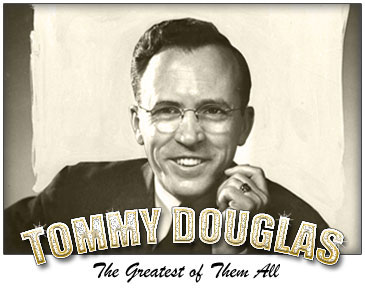
Any Canadian can tell you that we have universal health care because of the "greatest Canadian," Tommy Douglas (Kiefer Sutherland's grandfather, if that helps the younger folks).

The Canadian system can be diagrammed simply, as follows:

GOVERNMENT

PHYSICIAN

PATIENT

There, that was simple, wasn't it?

Want to know why US health care is expensive, inequitable and unwieldy?

Check out this diagram:

Or this one:

The Americans are so afraid of government involvement in health-care provision that they have created an unwieldy mechanism to flow funds and services into and around the health-care system. Most of it doesn't get to where it needs to go. It is a disaster.

Wealth is created by the free market. Let's keep government out of it as much as possible. However, infrastructure - and the rule of law - are best managed by government.

Health care is infrastructure. It is not a market commodity.

There, wasn't that simple?

My suggestion.... Bring the Canadians down. They'll have the US system working in a year or two!

No more Rube Goldberg health care in the US!
_

Friday, November 19, 2010

"Dear Uncle Sucker" - You Gotta Read This

19 November 2010

Barry Ritholz has written a brilliant piece of analytical satire - a parody of Warren Buffet's recent "Dear Uncle Sam" ("Pretty Good for Government Work") letter.

Go here now and read it - "Dear Uncle Sucker" - wow! That was concise!

Honestly, Mr. Ritholtz has dug much deeper than Mr. Buffett on this particular issue....
_

Thursday, November 18, 2010

What Is the "Funding Crisis?" (My Contest Entry)

18 November 2010

I have entered a contest....

From Bill Fleckenstein's November 18, 2010 “Ask Fleck" column:

Reader question: Hi, You often mention a funding crisis. I looked it up on search and there are so many references. Could you please define what is a funding crisis???

Fleck replies: OK... let's have some fun with this. I have been describing the future funding crisis since early 2009, so rather than me do it one more time, let's make this a contest. The reader who does the best job will get a free one year subscription, and we will place that definition in “Fleckisms.” The deadline for entries will be this Friday.

OK. Here is my go at that one-year free subscription.

What is the “funding crisis?”

Let’s begin with two basic principles:

1. Any entity that spends money must also receive money to fund its expenditures.

2.
There are two ways around this – credit and money creation (both temporary fixes).

What entities spend money and thus require revenues?

Basically all entities.

What entities have been spending too much money?

Basically, most of the above, but particularly the western nations and Japan, which have aging populations that have access to government-funded entitlements and require more of same, specifically health care and pension funds. Also – individuals and corporations in “bubble” sectors have been over-spending, often on the “wrong” things, such as overly lavish homes and productive capacity for items for which demand is not presently growing (this is called capital misallocation).

Is credit fixing the problem?

Well, it seemed to be doing so for a while. But individuals have over-borrowed, and now have difficulty repaying what they borrowed, particularly if they have lost their jobs or have reduced incomes for other reasons.

As to nations, again the western nations have been borrowing like crazy by selling bonds, and those who are not borrowing (read Asian and/or BRIC nations) are loaning them the money they need for expenditures, that is “funding” the deficits, the most egregious of which is that of the US, with something like a real $2 trillion annual shortfall in revenues versus expenditures and entitlements (promised future expenditures).

Also borrowing (like crazy) have been state (California, Illinois, etc.) and municipal governments and individuals. Corporations in non-bubble sectors have been more “sane.” Basically, most all (western) individuals and agencies are maxed out on credit, with many reaching the point of inability to repay it. Thus, creditors are beginning to question the wisdom of loaning money to individuals and government entities that are unlikely to repay them, particularly as they can no longer re-sell (“pawn off”) loan portfolios to imprudent “investors.”

Enter money creation, also known as quantitative easing, presently in its “QE2” stage. Central banks print new money to buy government bonds, thus inflating (and devaluing) the money supply. When money printing (massive) exceeds economic growth (stagnant), you're in trouble.

Thus, we’re in trouble now.

Only national governments and monetary authorities (specifically the European Union) can in most cases print money. So long as everybody is doing it, you have “competitive devaluation,” and one currency doesn't rise or fall that much versus another. However, some players are so profligate that they have no foreseeable ability to repay borrowed funds without money-printing, and at some point lenders are going to look at the bigger picture and decide they do not wish to be repaid in a sharply devalued currency (also known as “play money” or “monopoly money”) in exchange for “real money” loaned today.

A crisis represents a sudden shift in sentiment and behaviour in recognition of a gradually evolving picture of the world as it is. When those who loan money (buy treasuries) decide that they are unlikely ever to be repaid with anything of value (“real money”), they simply stop providing the revenues (cash flow) for the big spenders, in the present case, particularly the United States and some profligate European counterparts (known as PIIGS).

When treasury buyers stop funding government debts by buying government bonds, the bonds decline in value (reduced demand combined with over-supply), and interest rates rise until they are high enough that somebody (the “next fool”) starts buying them. At this point, we will see the kickoff of escalating interest rates combined with rising consumer prices and declining incomes and revenues, ergo, “the funding crisis.”

That is, the big spenders no longer have funds flowing in to cover their expenditures, thus necessitating a radical readjustment in either expenditures (drastically reduced) or the value of money (grossly inflated).

Coming soon (perhaps), to a government and/or nation state near you!

22 November 2010:

The winners to the "funding crisis definition" contest are now in. Mr. Fleckenstein has chosen the following two (hopefully the reader will not find my "essay," above, to be far off the mark):

The best reader definitions

Winner

A funding crisis happens to a country when other nations or institutions believe that the value of its sovereign debt or the value of its currency will decline significantly over time due to poor fiscal or monetary policies.

When that happens, fewer and fewer people are willing to purchase the sovereign debt of that country, leading to a sharp increase in interest rates and greatly increased difficulty in the ability of that country to raise new debt.

A funding crisis thus refers to the inability of a country to finance itself without resorting to outright money printing. This can lead to a vicious cycle of currency depreciation, rising interest rates, poor economic performance and poor investor sentiment, all of which feed on each other in a downward spiral.

A funding crisis can only end when proper monetary and fiscal discipline is restored, usually at the expense of severe economic hardship.

This one earned a tie as it was almost as good AND he used the search so well

In gentle criticism to the Rap Reader who inspired this little exercise, it may be useful and prudent to read a majority of those “so many references” pertaining to the “Funding Crisis”. I searched “Funding Crisis” and read everything that had a score of over 25. In this review, I discovered you started describing the “Funding Crisis” in the middle of 2006, but you did not give it a ‘handle’ until late 2008. I am glad I participated in this exercise as I learned a great deal and have a more clear financial picture of where we have been, where we currently are and where we may be going.

A Funding Crisis: the successor to the financial and economic crises; created mainly as a result of Federal Reserve policy over the last twenty years. A funding crisis occurs due to a lack of credibility in the Federal Reserve (and, the United States) to instill confidence in the value of the US dollar and repayment of current and future liabilities. The result of a US funding crisis is: a declining value of the US dollar and rising interest rates in debt markets.

My advice - if you want to understand the present economic situation, particularly in the US, do subscribe to Mr. Fleckenstein's moderately priced web service.

_

Sunday, October 24, 2010

An Answer to a Reader Question

24 October 2010

Some regular readers may have noticed I've been too busy to post. Here is a recent reader question, followed by my answer....

Anonymous said...

Hey Laurence,

We miss your sharp analysis of the Markets...Where are you? Don't give up just yet...Please. It ain't pretty going forward it seems....!!!

24 October, 2010 8:49:00 AM CDT

Laurence Hunt said:


No problem! I've been setting up a new home-office, and have had no free time since July. Short take on the gold market: I expect some consolidation here, but given seasonal, technical and macroeconomic factors, gold can still move higher. (QE II is only a symptom of the problem - which in short is a vicious cycle of capital misallocation and unsustainable debt - and is of little importance in itself. The bills are never going to be paid in "real" money!) As for gold stocks, they have already broken out to new highs and are testing their new levels right now. Only one toe is in the water here, so to speak. There is certainly no mania - and we are the better part of a decade away from any "bubble" in precious metals. Timing is always a mystery to me, so I don't know how long any retrenchment will last. I've taken out perhaps 10-15% in cash, but am otherwise still invested in gold and silver shares (with a bit in general mining, specifically BHP Billiton, about which I have posted in the past. Our largest positions are in ATAC Resources (due to its explosive appreciation), Goldcorp and Franco Nevada (I sold Silver Wheaton too soon, giving away my firmer confidence in gold). I am presently looking at Gold Resource, Andean American Gold and Minera Andes Warrants. I think that about sums it up.

24 October, 2010 1:25:00 PM CDT http://www.blogger.com/img/icon_delete13.gif

Saturday, August 14, 2010

Attaining

14 August 2010

Recently I've been meditating as to who is the most important of all jazz musicians.

A few weeks ago, I would have identified Mingus for all-around genius. Wednesday Night Prayer Meeting is a layered performance that can be continuously revisited, and still not exhausted.

However, recently I've been listening to John Coltrane's "Attaining" on Sun Ship.

Wow! It's a hard call. Mingus was consistently brilliant in his work, but Coltrane was versatile. Perhaps it is a limit of the structure of our human minds that causes us to ask such questions, which are perhaps pointless.

All I can say is, for a Friday night, Attaining by John Coltrane can take you places that few other pieces of music can possibly do.

Mingus. Coltrane. Genius.

There are more, many more of them. Our world is a better place for the creators!

Thank you.
_